Showing posts with label Meiji Mura. Show all posts

Wednesday, May 5, 2010

The Architecture Museum Meiji-Mura Part2

Imperial Hotel
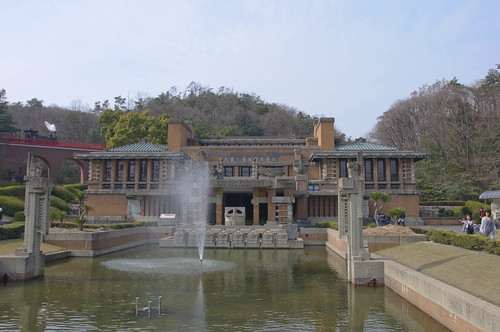
One of the most impressive buildings is the Main entrance hall and lobby of the famous Imperial hotel. Constructed in 1923, the hotel was designed by Frank Lloyd Wright one of the greatest architect of the twentieth century.

Imperial hotel main entrance
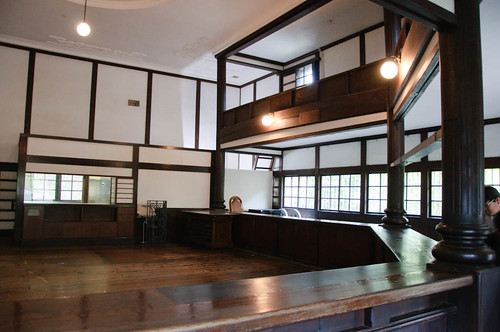
Inside the reconstructed lobby, there is the table used to sign the Treaty of Portsmouth an a cafeteria with live music
Miyazu district court
Miyazu district court (inside)
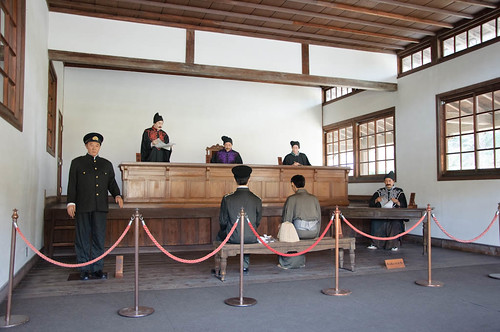
The Miyasu Court district from the Kyoto prefecture (1886), wax figures recreate a court scene of that era.
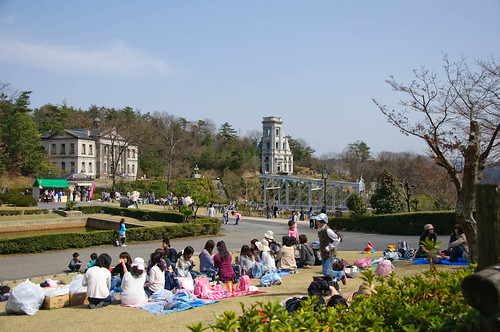
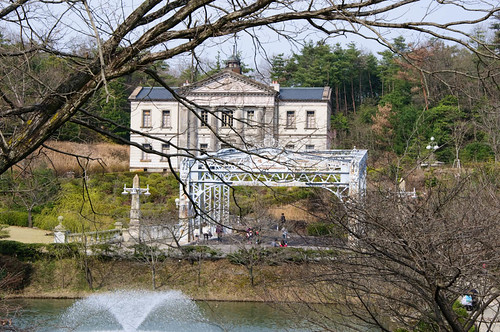
cabinet library & HO Kawasaki bank
cabinet Library & Shin-ohashi bridge
The cabinet library, formerly at Chiyoda ku Tokyo (1911), This library was used as the central library of the Meiji government.
The Bank of Kawasaki formely at Nihonbashi Tokyo (1927). The building was part of the old center of Japan.
The Shinohashi bridge, formely at Koto ku Tokyo, over Sumida River (1912). During the kanto earthquake in 1923, many lives were saved when the other bridges were destroyed and this bridge was used as scape route.
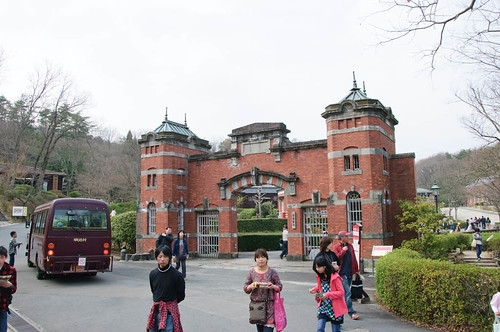
main gate, Kanazawa prision
Main gate of the Kanazawa prision formely at Kanazawa, Ishikawa prefecture (1907).
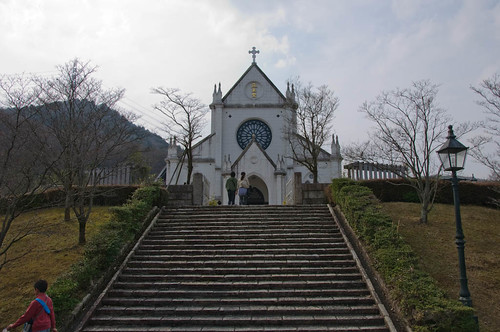
St. Francis Xavier's Cathedral
St. Xavier Cathedral
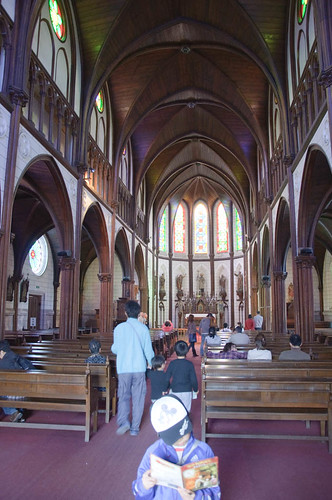
The St. Francis Xavier’s Cathedral, formely at Chukyoku in Kyoto (1890). The cathedral was built commemorate the missionary, it is used now to perform wedding ceremonies.
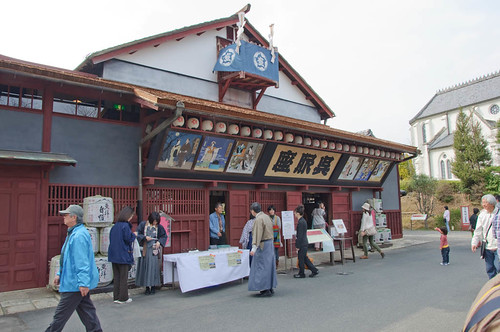
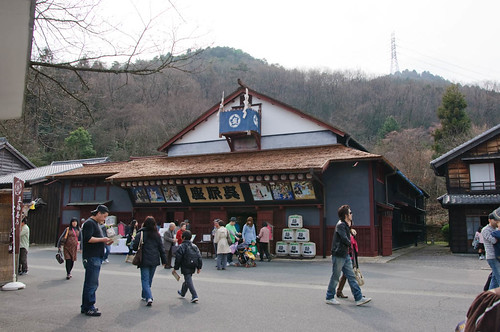
Kurehaza theater
Kurehaza za
Kurehaza theater (interior)
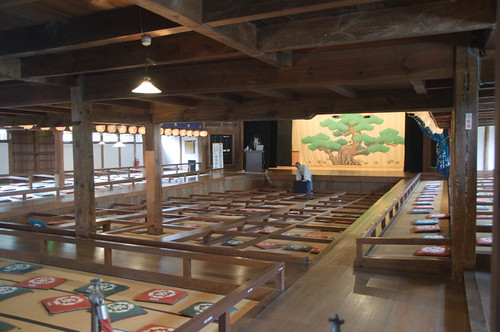
Kurehaza theater, an “Important Cultural Property” formerly at Nishihonmachi ikeda, Osaka prefecture (1892), the theater is currently used for performances.
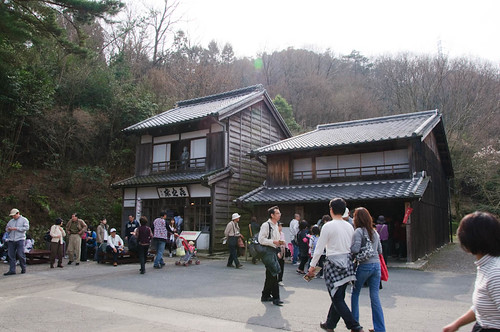
Kinotoko barbershop and lafcadio Hearn' house
Summer house of Lafcadio Hearn, formely at Jounokoshi, Yaizu, Shizuoka prefecture (1868), and the Kinotocho barber shop (1910), formely at Bunkyo ku tokyo.

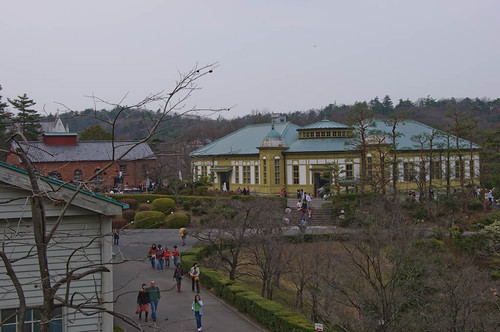
Ujiyamada post office
Ujiyamada Post Office
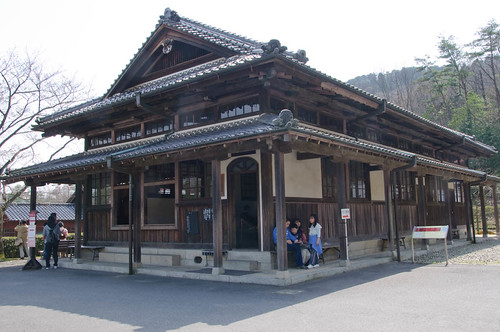
The Ujiyama Post office “Important Cultural Property”, formerly at Ise Mie prefecture (1909), the post office is still in operation and you can send postcards from this place.
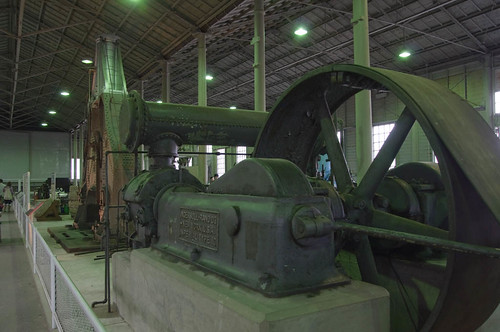
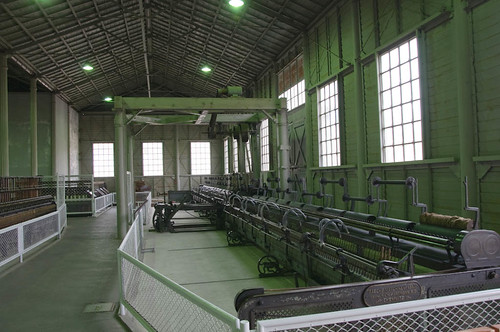
Machinery hall
Shinbashi factory of JR
Ring Spinning frame
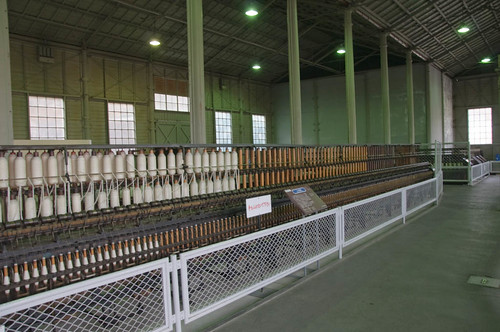
The Machinary hall, Formerly at Oimachi, Shinagawa in Tokyo (1872). At this building there is also the Ring Spinning frame “Important Cultural Property” (1983), the last machine used in the cotton spinning process.
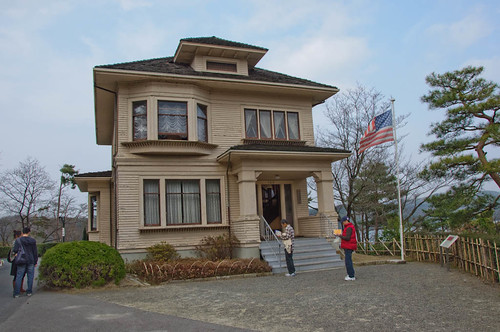
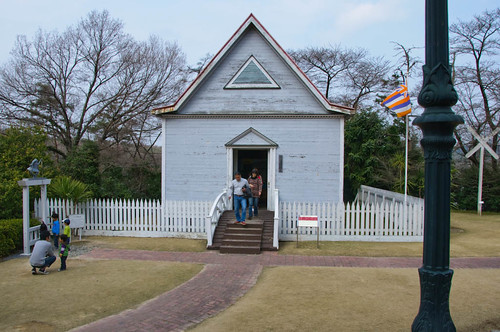
Japanese evangelical church
Japanese Immigrants' Hall
Between the buildings from overseas, the most outstanding are the Japanese evangelical church, formerly in Seattle, Washington (1907), and the Japanese Immigrants’ assembly hall from Hilo, Hawaii (1889), both used by the Japanese immigrants of the era.
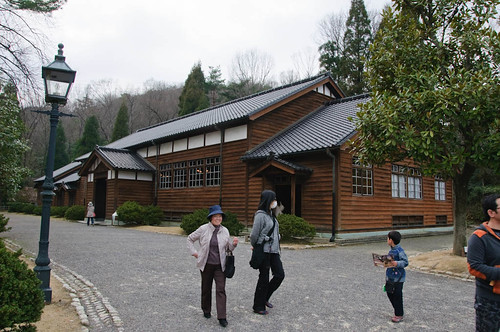
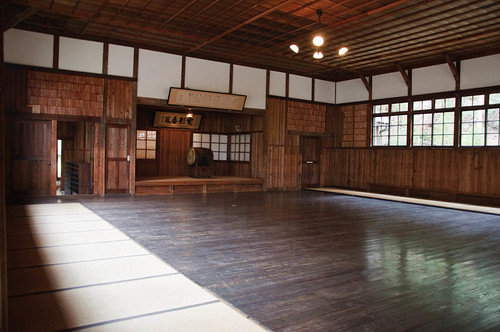
Museido Gymnasium for the martial artsMuseido Gymnasium
Mused Gymnasium for martial Arts, Fourth national High school. Originally at Kanazawa, Ishikawa prefecture (1917).


Español

Monday, April 26, 2010

The Architecture Museum Meiji-Mura Part1

Meiji Mura
The Museum Meiji-Mura in front of the Lake Iruka, in Inuyama city in Aichi prefecture, opened on 1965 to preserve the Japanese architecture of the Meiji period. One of the most remarkable things of Japan is the fast paced construction of new buildings, and the destruction of the old ones. The founders of the Meiji-Mura museum seeking to save important buildings from destruction created this museum that purchase period buildings marked for destruction, dismantle them and rebuild them back at the museum, recreating the original apparence. Ten of the buildings on the Museum are designeted “Important Cultural properties” by the Japanese government.The museum covers an area of 1,000,000 m2, and has over 60 buildings.

Streetcars of Kyoto
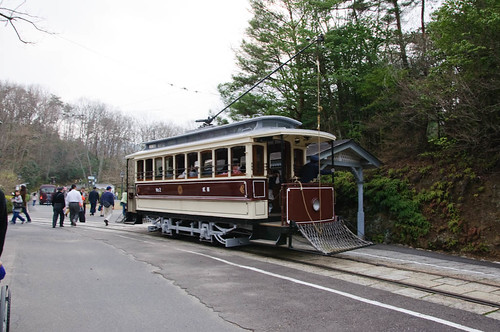
You can go around the park by foot, use a special bus, a steam locomotive and period streetcars fromn Kyoto. The streetcars of Kyoto were the first in Japan (1895).

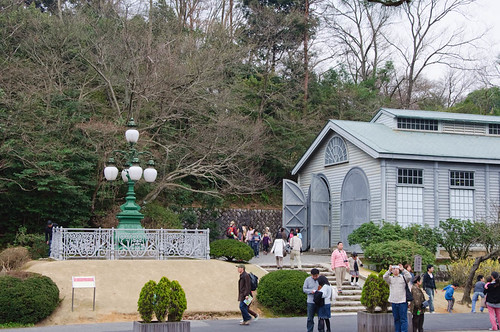
Lamp at nijubashi and Shimbashi factory
Electric lamp originally located at “Nijubashi” in the imperial Palace (1888), one of the first electric lamps in Japan. To the right is the Shimbashi factory of the Japan Railway bureu, originally at Shinbashi (1889).


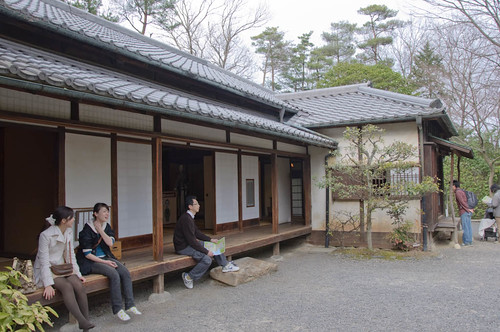
House of Mori and Natsume
House of Ogai Mori and Soseki Natasume
House of Ogai Mori and Natsume Soseki. The writers lived at this house, in Bunkyo Ward in Tokyo. Ogai Mori rented the house for a year in 1900, published “the dancing girl”, on that year, he also wrote “The courier” while he was living there. Natsume Soseki (the writer portrayed on the 1000 yen note), lived in this house 10 years later, publishing “I am a cat”, while living there, the novel portrays detail of living at this house, Soseki lived at this house for 3 years.

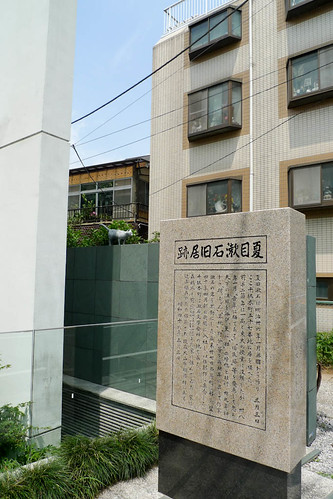
Soseki Natsume original house location
There is a small monument outside the School of Medicine of Japan marking the place of were the house use to be located.

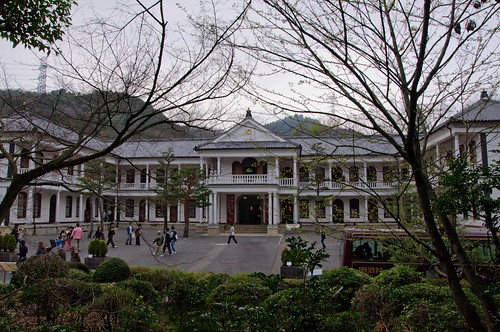
Mie prefectural office
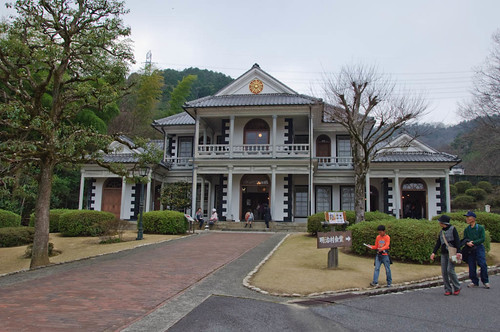
Mie Prefectural Office (1869), this building has been designated as an “Important Cultural Property”

brick road street
Higashiyamanashi country office
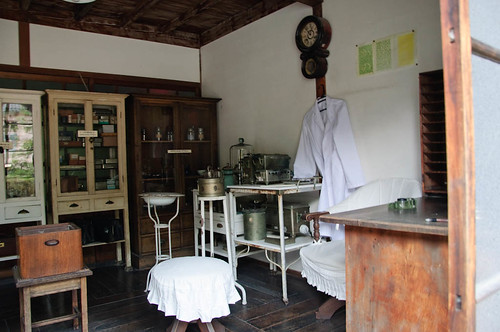
Office of Dr Shimizu
Tomatsu house at the brick road
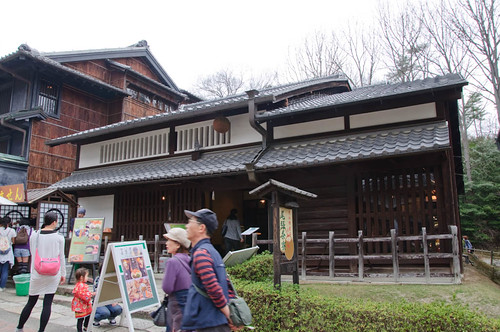
Tomatsu house
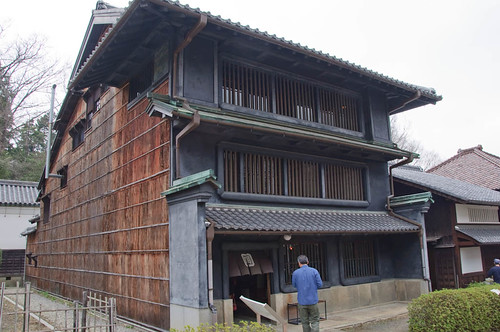
Nakai Sake-brewer
Yasuda bank
Located at the brick road street are: The Old Higashiyamanashi Country office (1885) an “important cultural property”, The Office of Dr. Shimizu (1897) from Nagano, The Tomatsu house (1901)from Nagoya, the Nakai sake-brewer house (1870) from Kyoto, and the Yasuda Bank (1908) from Fukushima.

Español